|
General Whale Information
Observe one of the world’s largest living creatures on a New England whale watch. A 30 ton humpback whale breach clear out of the water will take your breath away. Observing a 45 ft. finback whale teach her calf how to feed on a body of krill is something you will not soon forget.
The blue whale is the largest of all whales reaching an amazing maximum length of 100 feet and weight 150 tons. As we depart on your whale watch from Pt. Judith, Rhode Island, the finback whale will be the largest whale found in New England, growing to a length of 70 feet. Second in size is the rare right whale at 60 feet followed by the humpback whale at a mere 50 feet.
Whales, dolphins, and porpoises are aquatic mammals. They are warm blooded, breathe air, and nurse their young. They breathe through “blow holes” on the tops of their heads. A thick layer of blubber insulates them from cold water and stores energy used in migrations. Whales can consume several tons of krill, plankton, and tiny crustaceans in a single day.
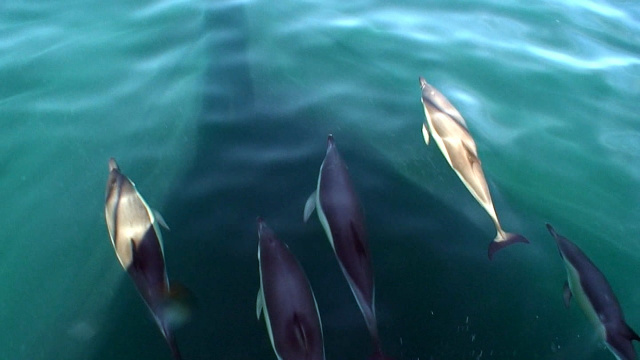
Two types of whales appear in New England waters. Baleen whales have no teeth and feed on small marine animals by filtering them through baleen plates. Baleen whales include the right, humpback, finback, and minke whales. Toothed whales include the Atlantic white-sided dolphin, harbor porpoises, and pilot whales.
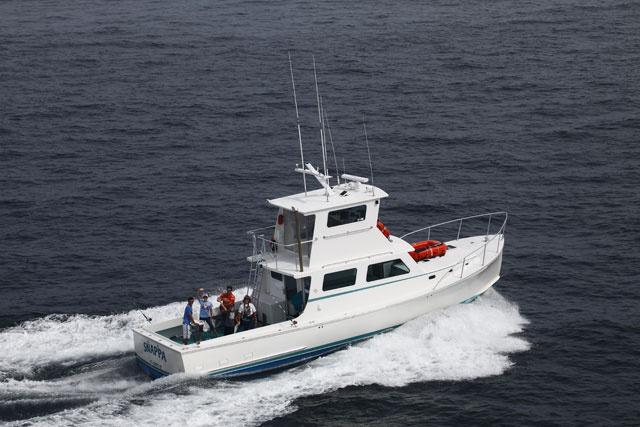
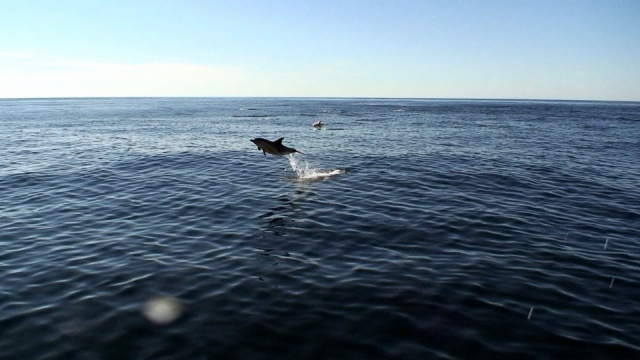
While on a Rhode Island whale watch boat, the offshore local waters may produce some of the most memorable moments in your life. On one remarkable day we viewed approximately 40 whales within a half mile radius from us, with some coming as close as 50 ft. from the boat. On other days we have seen pods of porpoises numbering between 50 and 100 in size.
Whale watching in RI is a great way to gather your family and friends of all ages. It could be the perfect opportunity to bring a group together for reunion, or a corporate team building event mixing a little work with pleasure.
Humpback Whale
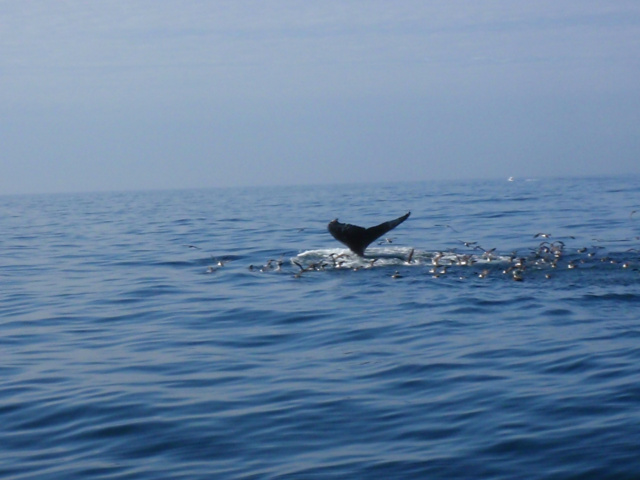
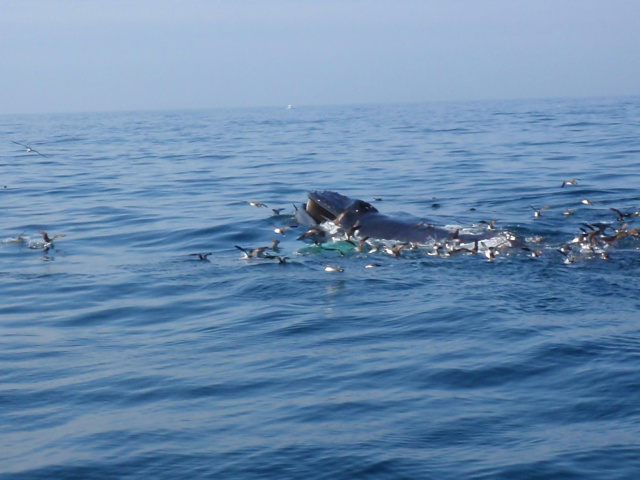
The humpback whale grows to a length of 50 ft. and can weigh up to 40 tons. The distinguishing features identifying this whale are its long white flippers with knobby bumps. When it dives, it will raise its flukes or tail out of the water. The flukes will have a saw-toothed trailing edge. The underside is distinctly patterned to identify individual whales. They feed mostly on sand eels and krill. Sometimes they form sub-surface bubbles called “bubble clouds” that corral and concentrate the prey. The whales then rise through the center of these bubbles with their mouths wide open. It is not unusual to see this majestic whale breach or slap its flippers on the surface. They leave New England waters by late fall and migrate to the Caribbean Sea to breed.
|